Welcome to the Norwegian Roots Project. Whether you are taking your first step into family history or chasing an ancestor back to a farm in Telemark, a valley in Gudbrandsdalen, or a fishing community on the west coast, you are in good company: Norway kept superb records, an enormous share of them are digitised and free, and a patient researcher can often trace a family back into the 1700s and beyond. This page explains how the site is organised and where to begin.
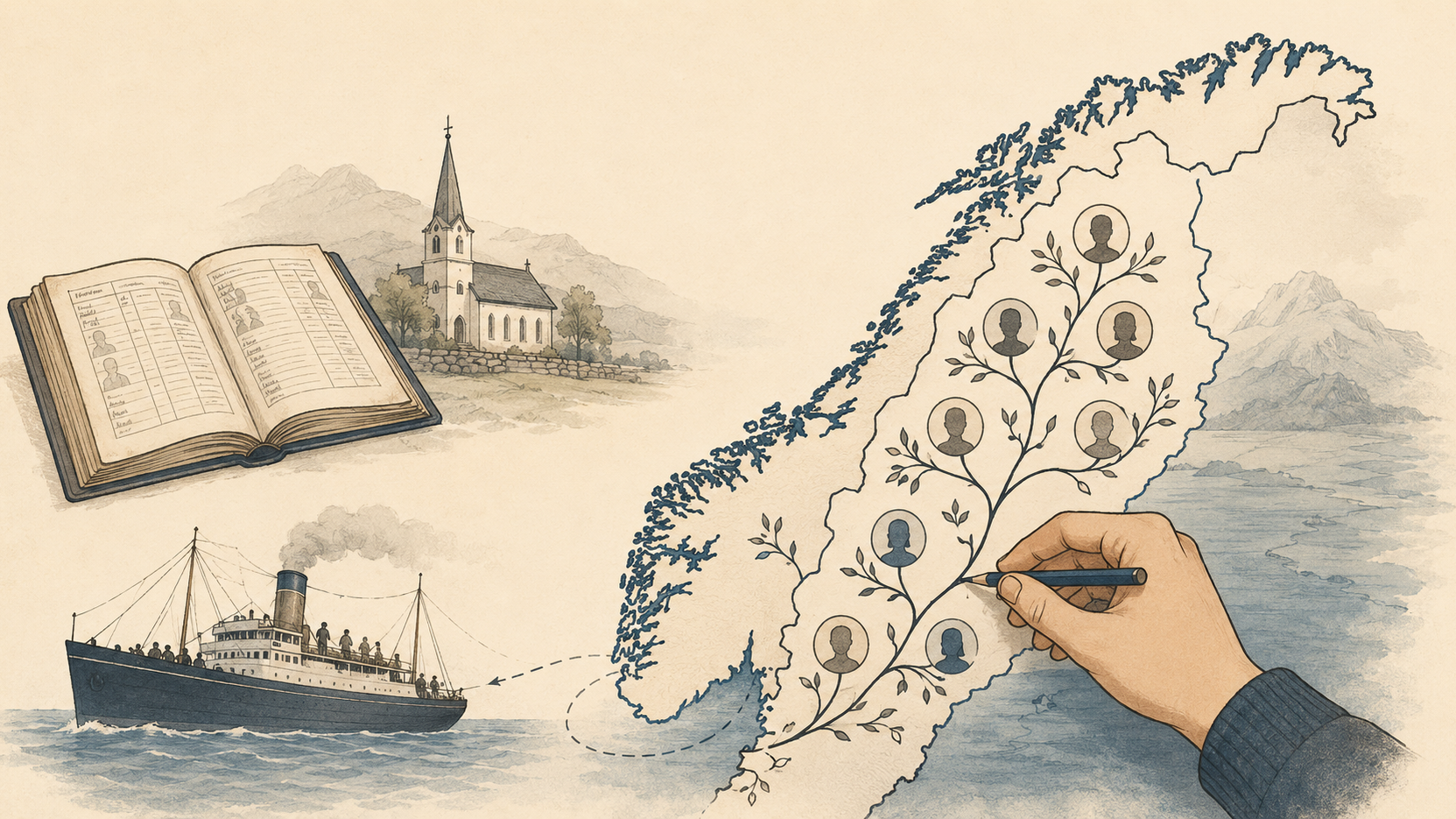
What makes Norwegian genealogy distinctive
Three things shape Norwegian research. First, the free records: Norway’s Digital Archives (Digitalarkivet) put church books, censuses and much more online at no cost—one of the finest free genealogy resources anywhere. Second, the farm-name system: Norwegians used patronymics (Olsen, Hansdatter) together with a farm name that could change when a family moved, which makes Norwegian names work quite unlike most. Third, the bygdebok: local farm-and-family history books that document the families of a district, often for generations—a genealogical treasure found in few other countries.
New to Norwegian genealogy? Begin the right way.
Norway keeps some of the most complete records in Europe — centuries of parish books, censuses, and probate records, nearly all free on Digitalarkivet. The catch is the farm-name system, which trips up almost everyone at first. This is the path from “my family came from Norway” to a documented, sourced tree.
Read the Step-by-Step Guide →Not sure where to start with your Norwegian ancestry?
Get the Norwegian Genealogy Quick-Start Checklist — a 5-step path to your first real ancestor record, plus the naming quirk that trips up almost everyone at first.
Can Norwegian ancestry lead to citizenship?
Here’s the honest answer: Norway grants citizenship by descent narrowly — being the child of a Norwegian citizen, not simply having Norwegian roots generations back. But 2020 changed the picture by allowing dual citizenship, which opened reacquisition for some former citizens. Find out exactly where your line stands before you spend anything.
See What You Actually Qualify For →
Go straight to the sources that build a Norwegian tree.
Norway’s records are deep, well-preserved, and mostly free online. Master these core sets — plus the bygdebøker that many families are literally written into — and you can often trace a line back into the 1600s.
Browse the Records Hub →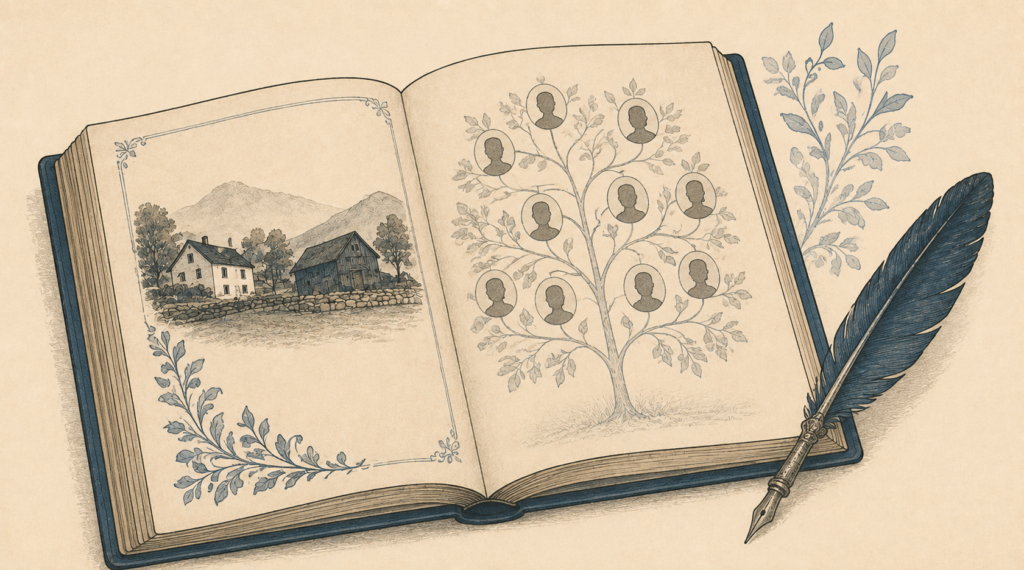
Why your Norwegian surname keeps changing.
Norwegian names are a two-part puzzle: a patronymic that shifts every generation, and a farm name that changed whenever the family moved. Add the surnames that were reshaped at Ellis Island, and it’s no wonder families get stuck. Here’s how to untangle it.
Explore Surname Origins →How your family left Norway — and where they settled.
Per capita, few countries sent more people to America than Norway. From the 1825 Sloopers to the great Midwest settlements, understanding that wave is often the key to jumping the Atlantic in your research.
Read the Emigration Story →Confirm your Norwegian ancestry with the right DNA test.
Norwegian DNA blends with broader Scandinavian roots, so ethnicity percentages only take you so far. The real power is in matches — and for many families, DNA also opens questions about Sami and other ancestries the records don’t name.
Compare the Best DNA Tests →Walk the ground your Norwegian family came from.
A heritage trip hits differently when you know the exact farm, the parish church, and the fjord your family left. Plan a journey built around your own research — not a cruise-ship checklist.
Plan Your Heritage Trip →