
You take a DNA test hoping it will confirm your Norwegian roots—and then the result reads “Norway & Sweden,” or simply “Scandinavia,” or shows a Norwegian figure that seems oddly imprecise or lower than you expected. This is one of the most common sources of confusion for people with Norwegian ancestry, and it is entirely normal. Norwegian DNA ethnicity results are inherently broad, for solid genetic and historical reasons. This guide explains why, and how to read your results sensibly.
The Scandinavian blur
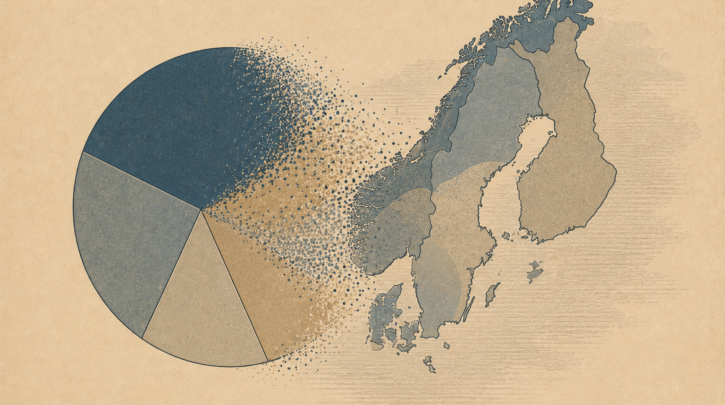
The central fact to understand is what we might call the Scandinavian blur. The populations of Norway and its neighbours—Sweden and Denmark—are genetically very similar, the product of long-shared ancestry and centuries of movement and intermarriage across a closely-connected region. As a result, DNA tests find it genuinely difficult to distinguish Norwegian ancestry from Swedish or Danish, because at the genetic level there is no sharp boundary between them. This is not a flaw in any particular test; it reflects the real, deep similarity of the Scandinavian populations, which no test can fully separate.
Why the estimate is broad
Because of this overlap, tests typically report Norwegian ancestry within a broad regional category rather than a precise national one. You may see a combined “Norway & Sweden” region, a wider “Scandinavia,” or a Norwegian figure that the test acknowledges is approximate. The estimate is produced by comparing your DNA to reference panels of modern people from each region—and where those regional panels themselves overlap heavily, as the Scandinavian ones do, the resulting estimate cannot be sharp. A broad Scandinavian result is therefore the expected, correct outcome for Norwegian ancestry, not a sign that anything has gone wrong.
How to read your results
Read your Norwegian ethnicity estimate as interesting background, not precise fact. It can broadly confirm Scandinavian ancestry and give a rough sense of proportions, which is genuinely satisfying, but do not over-interpret the exact percentages or expect it to pinpoint a region of Norway—it cannot. Treat differences between tests, or between your result and your expectations, as reflecting the approximate nature of the estimate rather than a hidden truth about your ancestry. The estimate is a fun and broadly informative feature, best enjoyed without leaning on its precision.
Estimates change over time
It also helps to know that ethnicity estimates are revised periodically. As testing companies gather more reference data and refine their methods, they update their estimates—so your Norwegian or Scandinavian percentages may shift, sometimes noticeably, from one update to the next. This is normal, and a healthy reminder that these figures are current best estimates rather than fixed measurements. If your numbers change, you have not changed; the model has. This impermanence is another reason to hold the ethnicity estimate lightly and to look elsewhere for the solid genealogical value of a DNA test.
Norway’s genetic character
Norway’s own population has an interesting texture. Broadly, Norwegians are relatively outbred—a reasonably large and mixed population rather than a tiny isolated one—so most Norwegian ancestry does not show the strong endogamy of some island or isolated communities. However, Norway’s geography of remote valleys and fjord communities meant some districts were historically quite isolated, with limited movement in and out, producing local founder effects. If your ancestry runs to such a district, you may notice an unusually large number of shared matches or repeated ancestral lines—a signal of that local history worth bearing in mind when interpreting your match list.
The Sami question
Some people with northern Norwegian ancestry wonder whether their results will show Sami ancestry, the heritage of the indigenous people of northern Scandinavia. DNA tests vary in whether and how they detect a Sami-associated component, and the resolution is limited, so results on this point should be read with particular care—and with respect for what a DNA percentage does and does not mean. Because this is a distinct and sensitive topic, we treat it fully and carefully in its own guide, Norwegian DNA and Sami ancestry.
Why matches matter more than percentages
Here is the key to getting real value from your test: for genealogy, the matches matter far more than the ethnicity percentages. While the estimate can only tell you, broadly, that you are Scandinavian, your DNA matches are specific living people who share specific ancestors with you—cousins who can help identify common ancestors, confirm lines, and even point toward the ancestral farm. The percentages are the headline that draws people in; the matches are the substance that builds a family history. Spend your attention there, and take those matches to the records, as we explain in connecting DNA to Norwegian records.
Honest expectations
In short, approach your Norwegian DNA ethnicity results with honest expectations: they will be broadly Scandinavian and approximate, they may lump Norway with its neighbours, they will change with updates, and they cannot pinpoint where in Norway your family came from. That is the nature of the science for this region, not a shortcoming of your test. Enjoy the estimate for the broad confirmation and interest it offers, understand why it is fuzzy, and then turn to the parts of DNA testing that genuinely advance your genealogy—the matches—and to Norway’s superb records, which alone can tell you the precise story the percentages never will.