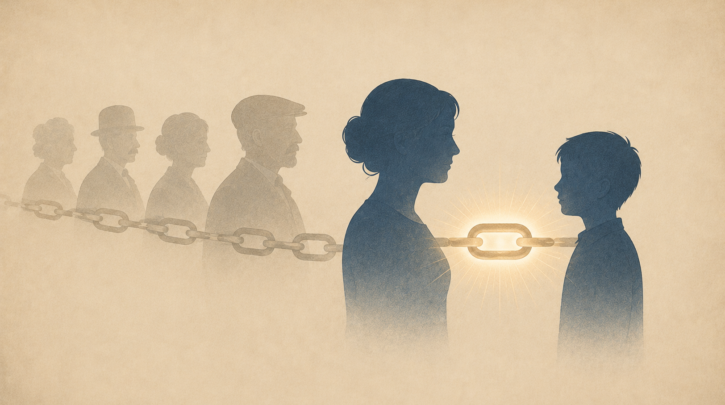

The most common misunderstanding about Norwegian citizenship is the belief that Norwegian ancestry—a Norwegian grandparent, great-grandparent, or a family that emigrated generations ago—can be a basis for a claim. It cannot. Norwegian citizenship by descent passes from a citizen parent to their child, and essentially stops there; it is not an ancestry entitlement that flows down the generations. Understanding this distinction clearly—parent, not ancestry—is the key to an honest assessment of your own situation. This guide explains it.
Important: This article is general information for educational purposes, not legal advice. Nationality law is complex, fact-specific, and subject to change. Always verify your situation with the Norwegian authorities—the UDI (Norwegian Directorate of Immigration)—or a qualified immigration professional before acting.
Citizenship by parent, not by ancestry
The foundation of Norwegian citizenship by descent is simple: a child acquires Norwegian citizenship at birth if a parent is a Norwegian citizen. This is jus sanguinis—citizenship by blood—but it operates one generation at a time, from citizen parent to child. It is emphatically not a rule that anyone descended from a Norwegian is entitled to citizenship. The relevant question is never “was someone in my family tree Norwegian?” but the far narrower “was one of my parents a Norwegian citizen when I was born?” For most descendants of emigrants, the answer to that narrower question is no.
Not sure where to start with your Norwegian ancestry?
Get the Norwegian Genealogy Quick-Start Checklist — a 5-step path to your first real ancestor record, plus the naming quirk that trips up almost everyone at first.
No grandparent route, no ancestry visa
It is worth stating the negatives plainly, because so much online content blurs them. Norway offers no grandparent route to citizenship: having a Norwegian grandparent does not, by itself, give you any claim. Norway offers no “ancestry visa” of the kind some other countries provide. And it offers no special immigration or citizenship track for the descendants of emigrants, however proud Norway is of its diaspora. Unlike a handful of countries that reach back to grandparents or beyond, Norwegian law simply does not extend citizenship by descent past the child of a citizen. For the grandchild or great-grandchild of a Norwegian, there is no descent route at all.
How the rules work by birth date
The precise rules for citizenship by a parent have changed over time, so a claim through a parent depends on when you were born. Under the current rules, for those born on or after 1 September 2006, a child acquires Norwegian citizenship automatically if either parent is a Norwegian citizen, regardless of the parents’ marital status or the child’s country of birth. For births before that date, older and more restrictive rules apply—historically turning on which parent was Norwegian and on marriage—so a claim through a parent for an earlier birth must be checked against the rules in force at the time.
The rules did not always treat parents equally
Those older rules matter because they were not always even-handed between mothers and fathers, or between married and unmarried parents. For much of the past, Norwegian citizenship passed more readily through a father, or depended on the parents’ marriage, in ways later reforms corrected. The 2006 change—either parent, regardless of marriage—was part of that modernisation. For someone assessing a claim through a Norwegian parent for a birth in earlier decades, the historical rules are what govern, and this is exactly the kind of fact-specific question to put to the UDI or a qualified adviser rather than to assume.
The retention rule: loss at 22
Even where citizenship did pass to a foreign-born child, Norwegian law can take it away again. Under the retention rule, a person born abroad who holds Norwegian citizenship through a parent, but who has never lived in Norway, automatically loses it at age 22 unless they have lived in Norway (or another Nordic country) for a sufficient period, or have applied before turning 22 to keep it. The purpose is to end citizenship where there is no real, lived connection to Norway. For diaspora families, this means a citizenship that technically passed to a foreign-born child may well have lapsed at 22—another way the chain quietly ends.
Why the chain doesn’t extend
Put together, these rules explain why Norwegian citizenship so rarely reaches the descendants of emigrants. Citizenship passes only from a citizen parent to a child; the emigrant generation typically lost their citizenship on naturalising abroad before 2020, so they were no longer citizens able to pass it on; and even where it did pass to a foreign-born child, the retention rule may have ended it at 22. The result is that, for the overwhelming majority of people with Norwegian ancestry more distant than a parent, no citizenship-by-descent claim exists—not through any oversight, but by the deliberate design of the law.
Assessing your own situation
To assess your situation honestly, ask the narrow, correct question: was one of my parents a Norwegian citizen when I was born—and, if born abroad, did that citizenship survive the retention rule? If yes, you may have a genuine claim worth pursuing with the UDI. If your Norwegian connection is a grandparent or further back, the honest answer is that no descent route exists, and your realistic options are naturalisation (if you will live in Norway) or—far more rewarding for most—reclaiming the heritage that needs no passport at all.