
For Norwegian ancestry, two DNA tests stand out—AncestryDNA and MyHeritage—and many researchers wonder which to choose. The good news is that they have complementary strengths, and the best approach often uses both. This guide compares them head-to-head for Norwegian research: database size and where their matches are, the tools they offer, how each handles Norwegian ethnicity, and a testing strategy that gets the most from each.
Database size and reach
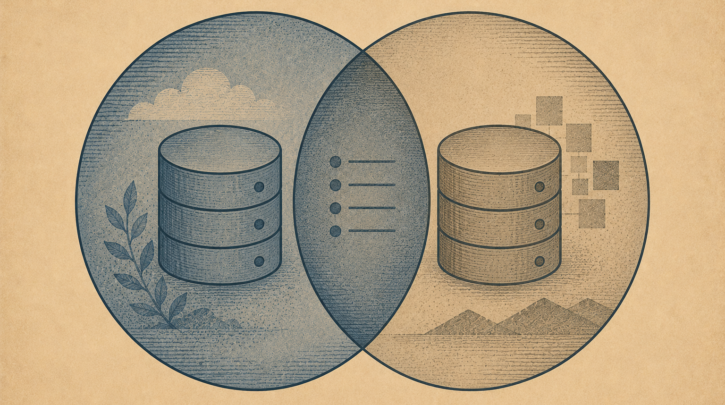
The single biggest difference is the database. AncestryDNA has by far the largest pool of tested people, which makes it the strongest tool for finding genetic relatives—the more people tested, the more of your cousins appear. MyHeritage’s database is smaller overall but proportionally stronger in Europe. For Norwegian research this matters in a specific way: AncestryDNA is best for finding the large Norwegian-American diaspora cousins, especially in the Midwest, while MyHeritage is better for reaching relatives still in Norway and Europe. The two databases point in different geographic directions, which is exactly why using both widens your reach.
Where your matches will be
Think about which cousins you most want to find. If your goal is to connect with other descendants of your emigrant family—the American branches who share your nineteenth-century Norwegian ancestors—AncestryDNA’s huge, heavily American database is where they are most likely to be. If your goal is to reach the relatives who never left Norway, or other European kin, MyHeritage’s European strength gives you a better chance. Most Norwegian-American researchers want both kinds of cousin, which again argues for testing broadly rather than betting on one database alone.
Tools: trees and the chromosome browser
The two differ in tools. AncestryDNA integrates with the largest collection of user family trees and offers strong hinting to suggest how a match connects—powerful for identifying relationships, though it notably lacks a chromosome browser. MyHeritage does offer a chromosome browser, letting you see exactly where and how much DNA you share with a match—useful for the more analytical work of confirming how a match fits. So AncestryDNA leans toward ease and tree-matching, MyHeritage toward analytical tools; which matters more depends on how deeply you want to work with the raw genetic data.
Handling Norwegian ethnicity
Both tests provide an ethnicity estimate, and for Norway both face the same limitation: the Scandinavian blur. Norwegian ancestry overlaps so heavily with that of neighbouring populations that neither test can cleanly isolate a “Norwegian” figure, and both typically report a broad Scandinavian region. Their estimates may differ from each other—each uses its own reference data and method—which is a useful reminder that these figures are approximate. For Norwegian research, do not choose between the tests on the basis of the ethnicity estimate; choose on the matches and tools, and read the ethnicity as background.
The most cost-effective strategy: test with AncestryDNA, then upload your raw data free to MyHeritage. Find current kit prices and upload details on the DNA hub.
Price and the free-upload strategy
Cost shapes the smart strategy. Buying two tests is an expense, but you rarely need to: MyHeritage accepts free uploads of raw DNA data from other tests, including AncestryDNA. This makes the most cost-effective approach clear—test once with AncestryDNA (the biggest database), then download your raw data and upload it free to MyHeritage to appear in its European-strong database too. For the price of one test, you gain the matches in both databases, capturing both the diaspora cousins and the still-in-Norway relatives. It is the best value in DNA testing for Norwegian ancestry.
A testing strategy for Norwegian roots
Putting it together, a sound plan for Norwegian ancestry is: start with AncestryDNA for its unmatched database and diaspora reach; upload free to MyHeritage for European and in-Norway matches plus the chromosome browser; and consider FamilyTreeDNA if you have a specific paternal-line question requiring Y-DNA. This gives you the widest possible net for cousins on both sides of the Atlantic, for close to the cost of a single test. Uploading to more than one site is a standard, sensible practice, and it is especially valuable for Norwegian research given how the diaspora and the homeland populations sit in different databases.
The bottom line
For Norwegian ancestry, AncestryDNA and MyHeritage are not really rivals to choose between but partners to combine. AncestryDNA’s vast database and tree integration make it the best single starting test, especially for finding diaspora cousins; MyHeritage’s European strength, chromosome browser and free uploads make it the ideal complement for reaching relatives in Norway. Test with the first, upload to the second, and you have covered the ground. Then—whichever test surfaced them—take your matches to Norway’s free records to turn genetic connections into a documented family history, the subject of connecting DNA to Norwegian records.